Advertisement
Percentage calculation shortcut methods for SSC CGL and bank exams

SpeedMath Team · 31 Mar 2026

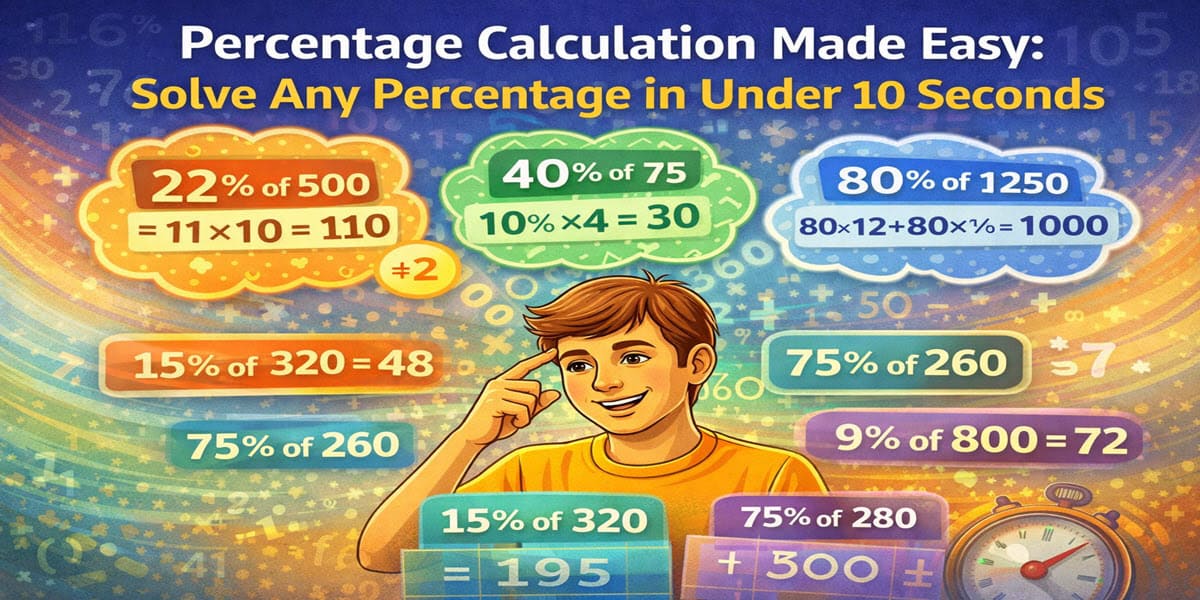
Percentage Calculation Made Easy: Solve Any Percentage in Under 10 Seconds

Percentages are everywhere — in exam papers, bank interest calculations, discount offers, tax computations, salary hikes, and data interpretation tables. Yet for many students, percentage calculations remain slow, error-prone, and mentally exhausting.

Squares of numbers 1 to 100 shortcut method for competitive exams

SpeedMath Team · 30 Mar 2026

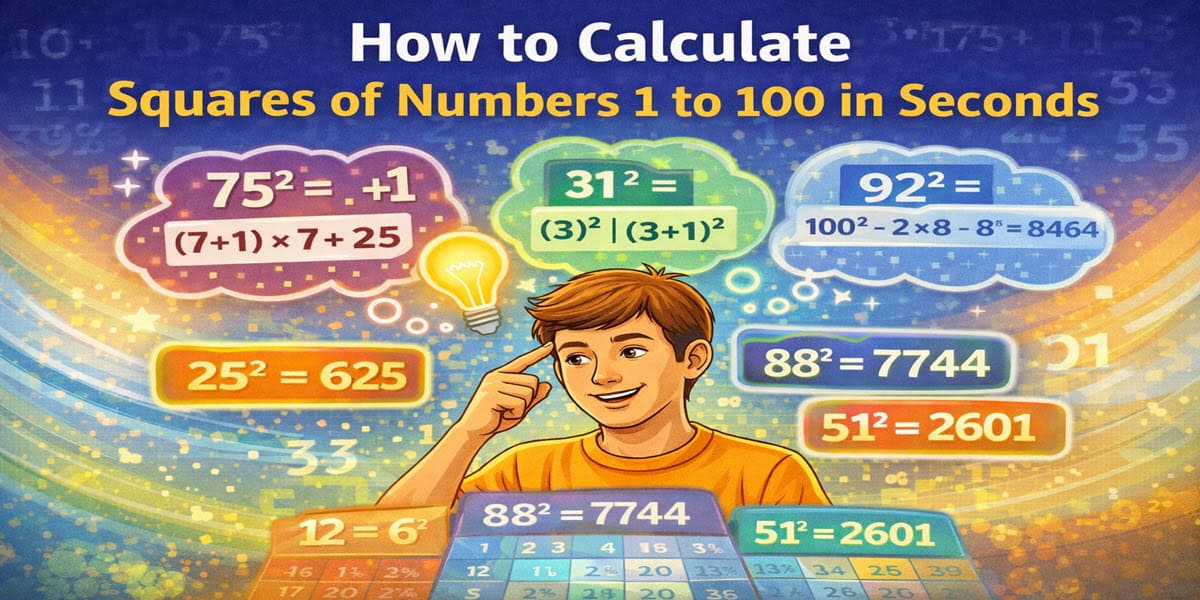
How to Calculate Squares of Numbers 1 to 100 in Seconds

In almost every competitive exam — SSC, IBPS, CAT, RRB, UPSC — squares of numbers appear repeatedly. They show up in simplification problems, geometry questions, algebra, data interpretation, and number series. A candidate who instantly knows that 67² = 4489 or 83² = 6889 has a measurable edge over someone who must work it out from scratch.

Multiplication tables 1 to 30 memory tricks and pattern-based learning guide

SpeedMath Team · 29 Mar 2026

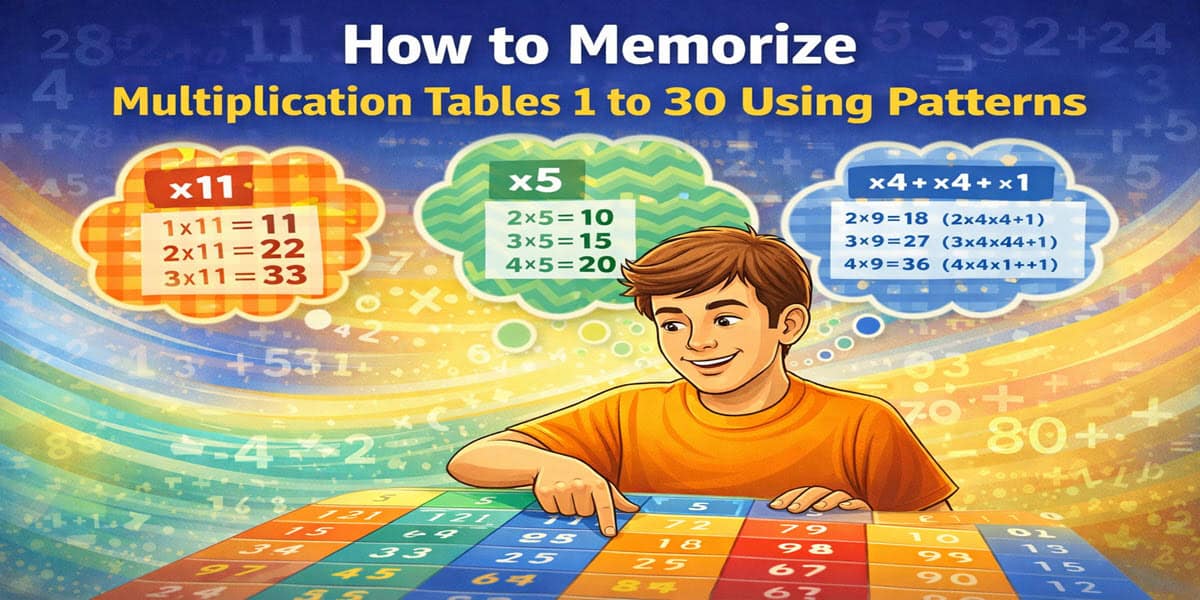
How to Memorize Multiplication Tables 1 to 30 Using Patterns (Fast & Easy)

Most students memorize multiplication tables up to 10 through sheer repetition. Then they hit table 11, 12, or beyond — and suddenly the rote memorization approach stops working. The numbers feel arbitrary, the patterns disappear, and the frustration begins.

Mental math tricks and fast calculation methods for competitive exams

SpeedMath Team · 29 Mar 2026

10 Mental Math Tricks That Will Change the Way You Calculate Forever

Mental math is one of the most underrated academic skills a student can develop. While most people reach for a calculator the moment numbers get uncomfortable, a trained mind can solve the same problem in seconds — no device required.

Speed math concept showing fast mental calculation techniques for beginners

SpeedMath Team · 29 Mar 2026

What Is Speed Math? A Complete Beginner's Guide to Fast Calculations

Speed math is the ability to perform arithmetic calculations quickly and accurately, using a set of mental techniques, patterns, and shortcuts rather than relying on pen-and-paper methods or calculators. It is a trainable skill, which means anyone — regardless of their current math level — can develop it with the right approach and consistent practice.

Advertisement

Ready to put it into practice?

Apply what you've learned — sharpen your speed, test your knowledge, and challenge yourself.